

On one sunny Sunday afternoon in summer, two old wise friends Mr. Mohabbat and Mr. Davis go for a walk in the park and start talking about love. As usual the conversation becomes *a little bit* psycho-philosophical.
D: So, Mohabbat, lately I’ve been thinking a lot about friendship, love and relationships. We hear the phrases like: “This person is my best friend… That person I love the most… Today I fell in love ….” etc etc quite ubiquitously. What are your views on these phrases? Do these words really mean anything or they are just a momentary expression of chemical sparks?
M: Well.. Davis, look around: there’s a little girl whispering the word love to her mother, there’s a young couple walking in the side alley saying I love you to each other, there’s a hungry man eating in that restaurant and saying in his mind with joy that he loves the dish. Numerous forms of love distributed all over, so wide spectrum of it’s expression, so colorful. Maybe they are momentary but appreciating the moment in the form of a simple word. It’s an amazing way of contributing and sharing happiness to the surroundings, ain’t it? But of course, falling in love, being in love, liking someone or loving someone are different states of mind. Remember what Buddha said:
“When you like a flower, you just pluck it. But when you love a flower, you water it daily.”
D: But can one single word really express all these various forms of feelings? What do we mean every time when we utter the word love? Can it actually ever be defined?
M: Wittgenstein would probably say here that any word, be it love or hate; has meaning only in the context of a game and they are loosely defined by a combination of common, or related, features rather than a rigorous single feature. As a matter of fact, we can define love or friendship in a particular language game in terms of a set of family resemblances; a set of features or similarities or feelings that the players of the game share. Accordingly, love and friendship get plurality of interpretations by different individuals, different cultures, different contexts (aka pragmatics). They are dynamic, playing plurality of roles in different language games. Words in this light are more as ‘tools’ because we use them to build our houses. In Wittgenstein’s words:
“The meaning of a word is its use in the language… Our investigation is a grammatical one. Such an investigation sheds light on our problem by clearing misunderstandings away. Misunderstandings concerning the use of words, caused, among other things, by certain analogies between the forms of expression in different regions of language.”
D: Okay! I get it but all these sound very technical. Hearing all these seems like, linguists can never truly fall in love! haha! Anyways jokes apart, but is there any underlying, universal feeling common to all these scenarios of expressing love among the mankind?
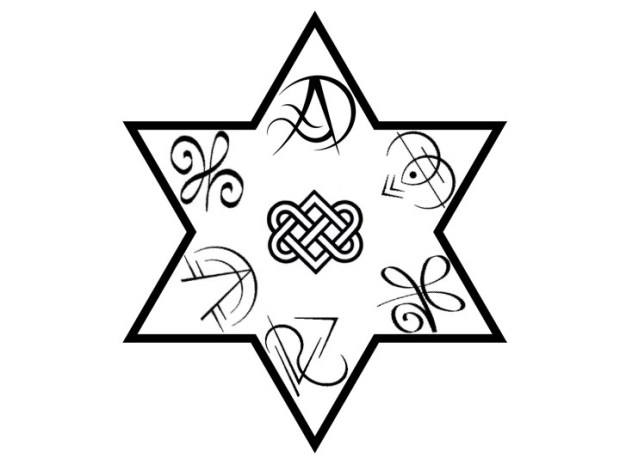
M: Well… you asked me to define love. So, I had to dive into philosophy of language a bit. Now, let me re-frame your question: is there any commonality or universality among the family resemblances (or essence?) of emotions shared in different forms of love (or so called different games)? This is more about investigating the feelings associated to love and friendship and their essentialism in the variety of relations we see in the society. Ancient Greeks classified love in 8 types: Eros (erotic, sexual or passionate love), Philia (affectionate, platonic, shared good-will between friends), Storge (familial love), Ludus (uncommitted, casual, playful love), Mania (obsessive love), Pragma (enduring, based on duties and responsibilities), Philautia (self love, self-compassion) and Agape (altruistic, self-less universal love). Of course this classification is questionable but as you can see the origin and catalysts of these 8 forms of love are different, falling into 8 different games with 8 different resemblances of expressions.

According to John Alan Lee who introduced the idea of color wheel theory of love, three primary types of love are eros, ludus and storge & three secondary types are mania, pragma and agape. And then he talks about nine tertiary love styles.
D: I see! What are the different sources or inducers of the 8 different forms of love? Where do you put the love between that daughter and the mother in these categories for example or that young couple?
M: Yes. Starting from Eros to Agape, the Greeks classified the catalysts of these 8 forms of love are: physical body, conscious mind, causal memories, emotions, survival instincts, unconscious mind, soul & spirit. Love between the little girl and her mother is storge, love for kinship, family. That young couple might have a philia, an affectionate friendship or might have a playful uncommitted love like, ludus. If they are a committed, passionate couple, their expression of love can be an eros too. If there’s an imbalance between ludus and eros, this can turn into an obsessive mania kind of love. But between an aged, matured couple all these usually turn into pragma.
D: It’s beautiful to see how ancient Greeks categorized the colors of love. But is any form better than the other according to them?
M: Ancient Greeks valued philia over other types as this is the form of love responsible for a good friendship full of affection and loyalty. Again it’s hard to generalize as any relationship between two or more individuals is practically based on mutual understanding and moral values which are always subjective. These values further generate respect, trust etc. 7.2 billion people on earth can have different concepts of philia or ethical norms behind any human or non-human connection but our society along it’s way since the ancient times, have created a number of named relationships and social contracts based on intimacy, commitments and passions (psychologist Robert Sternberg’s triangular theory of love), like for example marriage, friendship, friends with benefits, acquaintances, open relationships etc etc. But still the best form of love emphasized by Greeks, Buddhists and ancient Hindus is agape or selfless love, what I think we need in the present world the most.
D: Do you think psychologically all these named or tagged relationships give a relatively pleasant condition or a feeling of security in people if they put themselves in such boxes? What if some people don’t fit in any of these types (or maybe they don’t want to)? Do their bonds and values remain in constant denial?
M: Again, I think any named relationship does give a sort of mental security, feeling of belonging-ness to those who can find it. This is how with time pragma type of love generate in a relationship. But we have come a long way, so much so that we’ve started realizing that the socially constructed ideas and relationships don’t apply for all individuals, even within the same culture. Sources of happiness are not universal. Postmodernism has at least given that breathing air and has welcomed plurality in almost all areas of humanities, including love. Society has started understanding and appreciating the differences between biological sexuality and gender orientation for example, the world has started questioning gender binarism. According to me all these indicate that, we are slowly deconstructing our perspectives of love, gender dynamics, relationships, social values, so on & so forth.
D: You sound quite optimistic realist. Nice! You were saying a while ago that the best form of love is agape and world needs that the most at the present time. Would you explain a bit on that?
M: The origin of Agape lies in Philautia: by knowing thyself, being self confident through investigating your nature and nurture. To love others, self acceptance and appreciation is the first step. It starts by knowing your cognitive functions, the strengths and weaknesses of your personality as all these ultimately shape your behavior in variety of social situations. Also this process includes investigating your upbringing, your nurture, the morals that maybe your family, your societal rituals imposed on you unconsciously.
Remember in the 21st century the cultural borders of the world have come much closer to each other since the age of internet, globalization & traveling. And to associate yourself with others and to appreciate alternate perspectives, you need to have an open mind. So, it’s very essential to be aware of your own socio-cultural cognitive biases. From psychological observations of behaviors, it’s quite evident that love actually projects and reflects our aesthetics & ethics, through the kind of people we attract, the type of friends we make etc etc. All the different relationships we build and bonds we develop (maybe philia, storge or ludus), if we examine them well, can guide us to know ourselves better. So, all kinds of love are necessary in our society.
D: Okay, I get it from psychological POV. Philosophically speaking how do you relate this self-love or Philautia with Agape?
M: As Aristotle said: “All friendly feelings for others are an extension of a man’s feelings for himself”. Essentially speaking, love makes an individual appreciate the essence of other(s) which is (partly) a reflection of him/herself. An existentialist will say: one associates and expands her/his existence via appreciating and caring the existence of the other(s). So, Love is that glue that makes individuals to existentially unite into one collective entity: love for nature, love for a community, love for this planet, love for the animals.
D: So, you think love is an essence of human existence? Like an universal form?
M: No! I don’t mean the word essence in a way like having any inherent identity or value. We all are processes. And as an existentialist I believe our existence precedes essence. But in this ever-changing process, we love the values of others that we see as a reflection of us for a period of time. Some values persist. This is why love itself is a process too. Our color of love changes. And through the experience of this process I believe one’s threshold of openness and acceptance expands, if one is aware enough. One must keep this unending process of philautia alive to make better versions of oneself.
D: I see! Now it’s getting clearer to me. So, what are the psychological functions of human mind that relate this process of philautia to agape? From self-love to collective-love?
M: One cognitive function that naturally resonates among individuals to relate with each other is empathy, which in Carl Jung’s terminology is extroverted feelings. It’s about associating other’s feelings to yourself which ultimately makes you more tolerant and acceptable to different cultures, mindsets and perspectives in the present world.
D: So, empathy is one of the keys to altruism in the contemporary world?
M: You can say so. Empathy naturally connects to Kantian deontological morality, The Supreme Categorical Imperative as well: “act only according to that maxim whereby you can, at the same time, will that it should become a universal law”. This is derived from The age old Golden rule of ethics: “do unto others as you would have others do unto you” but Kant added the condition of being a universal law. According to me, an empathetic person will naturally feel this maxim. But one must follow it with caution because when one accepts the feelings coming from others, it can be very draining and exhausting. Also empaths must be careful from narcissists and persons like that.
What I say that we need today is: emotional intelligence. A balance of various feelings, emotions (both that of your own and others) and thinking, decision making, behaviors. Just like Yin & Yang, to keep the balance between emotions and intelligence to adapt and tackle various situations. It’s just an age old order in a new psycho-linguistic wrap for the present generation.
REFERENCES & FURTHER READINGS:
- These Are the 7 Types of Love, Psychology Today
- 8 Different Types of Love According to the Ancient Greeks, lonerwolf
- Ludwig Wittgenstein, Philosophical Investigations, Oxford, 1953
- John Alan Lee, Colours of Love: An Exploration of the Ways of Loving (1973).
Disclaimer: This is a personal weblog and it’s not a peer-reviewed article. Both the characters in the dialogue are fictitious. The ideas and thoughts expressed here are entirely from the perspective of the blogger who is solely responsible for and the content is not intended to harm or disrespect any particular authority or any individual.

 Saikat Chatterjee